Kuno National Park · Project Cheetah
Cheetah of Kuno
The fastest land animal on Earth is running again in India — in the grasslands of Kuno.
चीता · Acinonyx jubatus
The fastest land animal on Earth, and the only large carnivore India ever lost completely. Seventy years after it was declared extinct here, the cheetah is running again in the grasslands of Kuno.
Fastest speed measured in the wild
93
km/h · 25.9 metres every second
Recorded with GPS collars on wild hunting cheetahs in Botswana (Wilson et al., Nature, 2013).
52
cheetahs in India at the four-year review, 17 Sep 2026
32
of them born in India
49
in Kuno National Park
1952
the year India declared the cheetah extinct
Built for speed
How fast can a cheetah run?
A cheetah's top speed is only half the story. What really sets it apart is acceleration: how quickly it reaches top speed, and how quickly it can brake and turn to follow a dodging chital or chinkara.
Top speed compared, in km/h
Cheetah
measured, wild
Blackbuck
approx.
Tiger
approx. 56–64
Nilgai
approx.
Cheetah and Usain Bolt are measured peaks. The other animals are commonly quoted approximate figures.
A 100-metre race
Cheetah
Sarah, Cincinnati Zoo, 2012
5.95 s
Usain Bolt
World record, 2009
9.58 s
Played in real time. The cheetah finishes when Bolt is only about 60 metres down the track.
What GPS collars revealed about real hunts
173 m
average length of a hunting sprint
~560 m
longest sprint recorded; most chases are over within a few hundred metres
4×
the acceleration power of Usain Bolt
~6 km
walked on an average day between sprints
From 367 hunting runs by five wild cheetahs tracked over 17 months in Botswana. You may still see older claims of 110–120 km/h; they come from less rigorous measurements.
The body of a sprinter
Flexible spine
The spine coils and stretches like a spring, lengthening each stride to around 7 metres at full speed.
Grip like running spikes
Claws are only partly retractable and stay in contact with the ground, while hard, ridged foot pads give traction when turning.
Tail as a rudder
The long, flattened tail swings to counterbalance the body during sharp, high-speed turns.
Big lungs, wide nostrils
Large nasal passages, lungs and heart pull in and move the oxygen a sprint demands.
Light and slender
A small head, narrow waist and long legs. It is built for the chase, not for fighting over a kill.
Short, hot bursts
A sprint burns so much energy that a cheetah must stop and pant for many minutes afterwards, before it can even eat.
How fast is a cheetah?
Cheetah vs lion, tiger, blackbuck, chital and Usain Bolt
The cheetah is the fastest land animal on Earth. Race Kuno's star against other animals over 100 metres, each running at its top speed the whole way.
Cheetah
measured, wild
3.9 s
Lion
approx.
4.5 s
Blackbuck
approx.
4.5 s
Chital
approx.
5.5 s
Tiger
approx. 56–64
6.0 s
Leopard
approx.
6.2 s
Usain Bolt
peak, 2009
8.1 s
Real sprints start from standing, so actual times are longer: Usain Bolt's world record is 9.58 s. Only the cheetah and Bolt figures are measured peaks; the rest are commonly quoted approximations.
A GPS-collar study of wild cheetahs measured a top speed of 93 km/h (25.9 m per second). More about the cheetah's speed
Scientific profile
Know the animal
The cheetah is the only living member of its genus. It is a big cat by size, but it cannot roar. It chirps, purrs and yelps instead.
Vital statistics
Cheetah or leopard?
How to tell them apart on safari
Kuno is one of the few places where you could see both big spotted cats. Here is what to look for.
The cheetah in India
Lost, and brought back
For centuries cheetahs roamed the grasslands and scrub of central and western India. Hunting, capture and the loss of grassland and prey drove them out. This is the story from the royal courts to Kuno.
Before extinction
Mughal era
The hunting cheetah
Cheetahs were captured and trained to course blackbuck for royalty. Emperor Akbar is said to have kept around 1,000 at a time. Wild cheetahs rarely breed in captivity, so each one was taken from the wild.
1800s – 1900s
Steady decline
Sport hunting, bounties, capture and the loss of open grassland and prey reduced the cheetah to a few scattered animals.
1947
The last three
The last three confirmed Indian cheetahs were shot in Koriya, in present-day Chhattisgarh.
1952
Declared extinct
The cheetah became the only large mammal declared extinct in independent India.
Project Cheetah
2020
Green light
The Supreme Court allowed African cheetahs to be introduced at a suitable site. Kuno, already surveyed as a promising site, was chosen.
17 Sep 2022
The return
Eight cheetahs from Namibia were released into Kuno, the first intercontinental translocation of a large carnivore of its kind.
18 Feb 2023
South Africa
Twelve more cheetahs arrived from South Africa.
Mar 2023
First cubs born in India
Siyaya (renamed Jwala) gave birth to the first cheetah cubs born on Indian soil in over 70 years. One of them, Mukhi, survived.
2025
Gandhi Sagar, and a second generation
Cheetahs were moved to Gandhi Sagar Wildlife Sanctuary, a second home in Madhya Pradesh. Mukhi, now adult, gave birth to five cubs: the first India-born cheetah to have cubs of her own.
28 Feb 2026
Botswana
Nine cheetahs arrived from Botswana to add new bloodlines.
17 Sep 2026
Four years on
The official four-year review counted 52 cheetahs in India, 32 of them born here.
21 Sep 2026
Farewell to Gaurav
Gaurav (Elton), one of the original Namibian males, died in Kuno. His three cubs with the South African female Nirva are independent adults.
Project Cheetah today
Where India's cheetahs are now
Figures from the official review of 17 September 2026. Many cheetahs live in large soft-release enclosures (bomas) before being released into the open forest.
By place
Kuno, free-ranging in the wild
17
Kuno, soft-release enclosures
32
Gandhi Sagar Sanctuary
3
Total
52
By origin
Namibian founders
3
South African founders
8
Botswana founders
9
Born in India
32
Total
52
Since the review, the Namibian male Gaurav died on 21 September 2026. Numbers change with births, deaths and moves, so treat these as a snapshot.
Kuno National Park is the primary site for Project Cheetah, India's programme to bring the cheetah back into the wild after the species went extinct in the country in 1952.
The project is widely described as the world's first intercontinental translocation of a large carnivore — moving cheetahs across continents and reintroducing them into a landscape where they had been absent for more than seven decades.
But Project Cheetah did not end when the first cheetahs were released.
It is an active, closely monitored conservation programme, with real successes, real setbacks and a population that is still growing and adapting to its new home.
Visiting Kuno means seeing that story while it is still unfolding — not visiting a finished conservation project.
Project Cheetah at a Glance
Launched
17 September 2022
Founding release
8 cheetahs from Namibia
Second release
12 cheetahs from South Africa, February 2023
Third release
9 cheetahs from Botswana, February 2026
Population snapshot
52 cheetahs in India, including 32 Indian-born cheetahs (four-year review, 17 September 2026)
Primary site
Kuno National Park, Madhya Pradesh
Kuno core area
748.76 sq km
Second active site
Gandhi Sagar Wildlife Sanctuary, Madhya Pradesh
Future sites under preparation
Banni Grasslands, Gujarat; Nauradehi Wildlife Sanctuary (now part of Veerangana Durgavati Tiger Reserve), Madhya Pradesh
Project authority
National Tiger Conservation Authority (NTCA), Ministry of Environment, Forest and Climate Change, with the Madhya Pradesh Forest Department and Wildlife Institute of India
The project follows a landscape-based approach, with the long-term aim of managing cheetahs across multiple sites rather than depending on one national park alone.
A Changing Number
Cheetah numbers can change quickly as cubs are born, animals die and individuals are moved between sites.
The population figure on this page should therefore be treated as a snapshot, not a permanent number.
We recommend checking this page against the latest official Project Cheetah information whenever new population data is released.
Last updated: September 2026
Why Kuno Was Chosen
Cheetahs need space.
They are built for speed and generally do best in landscapes where open ground allows them to see, stalk and chase prey.
Kuno offers a combination of open grasslands, savanna-like areas, dry forest, scrub and relatively low human disturbance.
Research associated with Project Cheetah has also shown that free-ranging cheetahs at Kuno make substantial use of open grassland and savanna mosaics.
This is one reason a Kuno safari feels different from a classic tiger-reserve drive.
You are not simply driving through dense forest looking for a large cat.
You are moving through the kind of open, expansive landscape that makes a cheetah possible in the first place.
Chital deer are an important prey species for Kuno's cheetahs, and free-ranging animals hunt naturally across the landscape.
For mothers raising cubs, hunting becomes particularly demanding because they have a growing family to feed.
Cheetah Releases at a Glance
The Story So Far
17 September 2022
The First Release
Eight cheetahs were brought from Namibia and released into Kuno National Park.
This marked the formal beginning of Project Cheetah and the return of the species to India after more than seven decades.
The first group consisted of five females and three males.
February 2023
Cheetahs Arrive From South Africa
A second group of 12 cheetahs from South Africa arrived in India.
The additional animals broadened the founding population and added further genetic diversity to the reintroduction programme.
2023–2025
Building a Wild Population
The project gradually moved from initial acclimatization toward free-ranging conditions.
Cheetahs were progressively released into larger areas of Kuno, where they began hunting naturally, establishing territories and moving across the landscape.
Several females, including Jwala, Gamini, Nirva and Veera, went on to raise cubs at Kuno.
The arrival of Indian-born cubs became one of the project's most important signs that the reintroduced population was beginning to reproduce under Indian conditions.
April–September 2025
Expanding to a Second Site
Kuno was never intended to be the only landscape involved in Project Cheetah.
As part of the project's long-term metapopulation strategy, cheetahs were moved from Kuno to Gandhi Sagar Wildlife Sanctuary in Madhya Pradesh.
This marked an important transition — from establishing a population at Kuno to beginning a wider network of cheetah landscapes.
February 2026
Cheetahs Arrive From Botswana
A third international group arrived from Botswana.
Nine cheetahs — six females and three males — were brought to Kuno in February 2026.
The purpose was to broaden the founding population and strengthen the genetic base of India's reintroduced cheetah population.
Today
March 2026 — Population Reaches 53
The official population reached 53 cheetahs in March 2026, including 33 Indian-born cheetahs at that point.
May 2026 — Continued Growth Reported
By May 2026, the Government of India was still reporting a population of 53, with 33 Indian-born cheetahs, while emphasizing the project's continued growth and landscape-based approach.
The important point is not simply the number.
It is that India now has cheetahs that were:
Born in India
Raised in the Indian landscape
Hunting naturally
Moving across large areas
Reproducing in the wild
That is what makes Kuno such an important place to visit for anyone interested in conservation.
Explore Kuno National ParkThe Cheetahs of Kuno
Project Cheetah is not a single group of animals. The population is made up of founding cheetahs from different African countries, together with an increasingly important population born in India.
The Namibian Founders — 2022
The original eight cheetahs released in September 2022 formed the foundation of the programme.
Some of these animals became established members of Kuno's free-ranging population and went on to reproduce.
Among them is Jwala, who has become one of the important mothers in the project.
The South African Group — 2023
Twelve cheetahs arrived from South Africa in February 2023.
This group included Gamini and Nirva, both of whom have contributed to the growing population through successful reproduction at Kuno.
Their offspring are now part of the Indian-born population.
The Botswana Arrivals — 2026
Nine cheetahs arrived from Botswana in February 2026.
They were brought in to strengthen and widen the founding population and to support the project's long-term genetic management.
The Botswana addition also represents the continuing international cooperation behind Project Cheetah.
India-Born Cheetahs
Perhaps the most exciting part of the project is the growing number of cheetahs that were born in India.
These are no longer animals simply adapting to a new country.
They were born here.
They are learning to hunt here.
They are growing up in India’s landscape.
And some of them are already reproducing.
In March 2026, official reporting recorded 33 Indian-born cheetahs, marking an important milestone in the establishment of a new generation in India.
This is one of the clearest signs that Project Cheetah is moving beyond the initial release phase and into the much more difficult task of establishing a self-sustaining population.
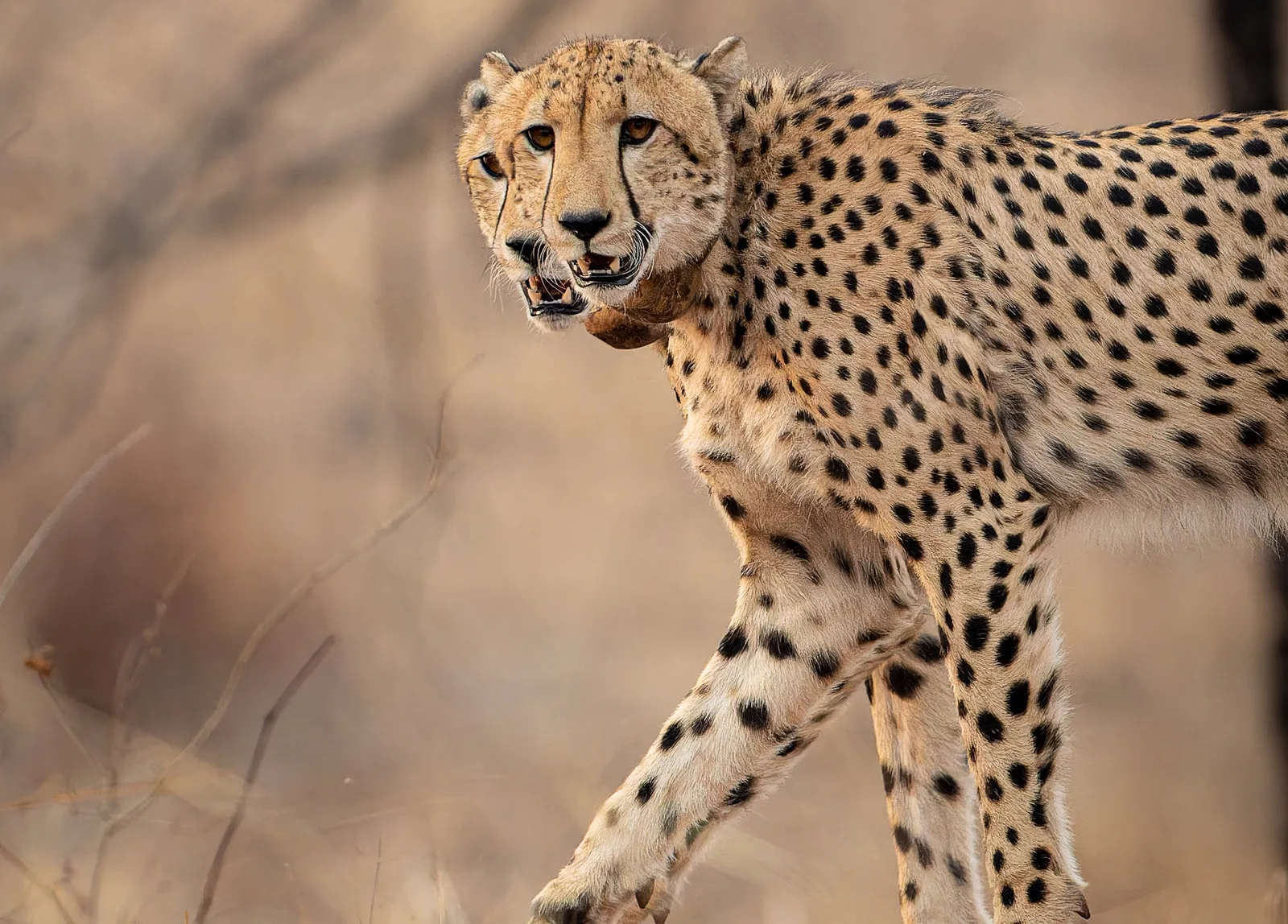
Reproduction and New Generations
Reproduction has become one of the most important developments at Kuno.
Females including Jwala, Gamini, Nirva and Veera have raised litters in the Indian landscape.
For a reintroduction project, births are important — but survival is even more important.
Cubs have to survive their first months, learn to move through the landscape and eventually become independent.
That is why Project Cheetah is monitored continuously rather than simply counting births.
Every new generation provides more information about how reintroduced cheetahs are adapting to Kuno.
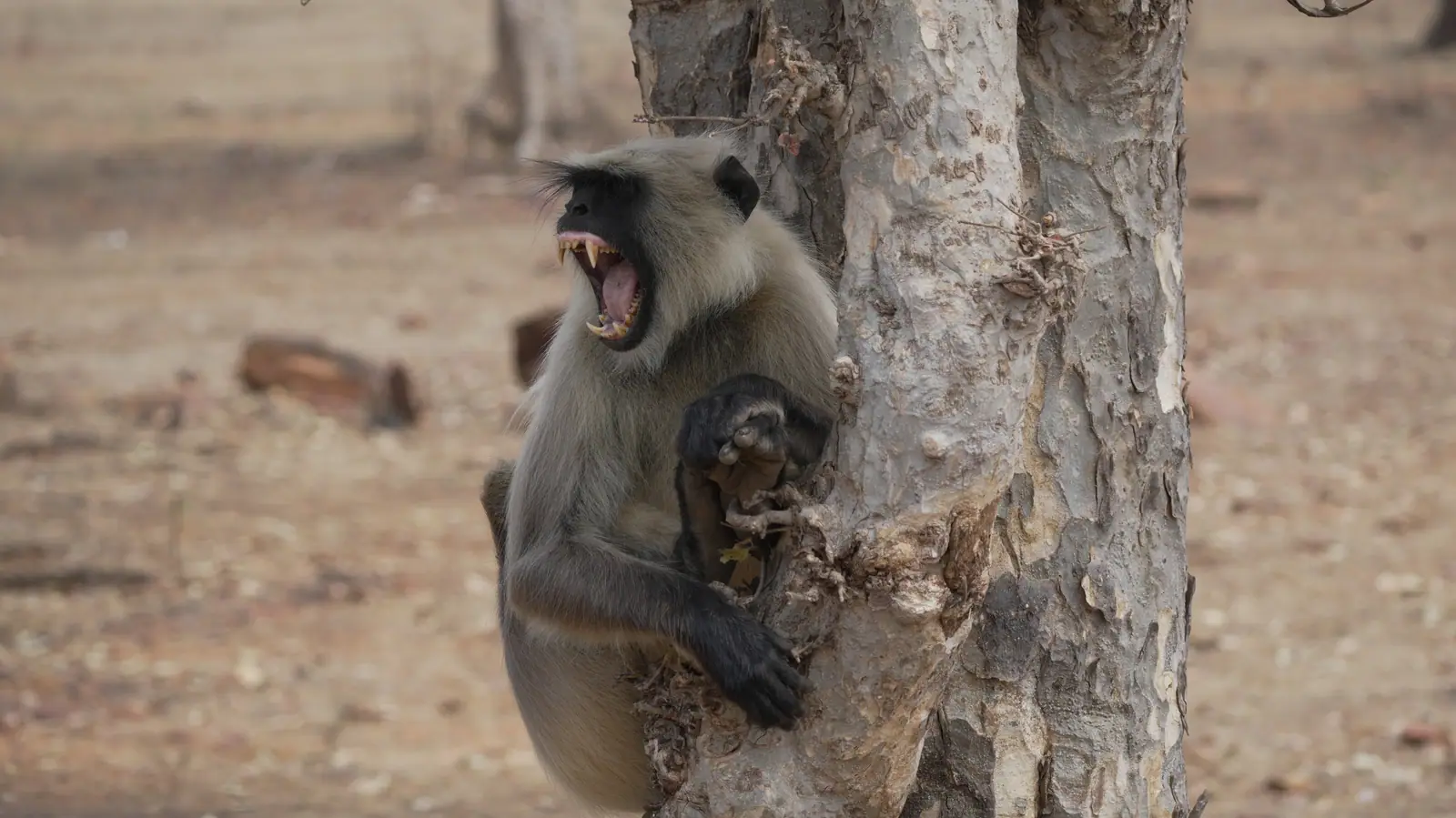
Movement Across the Landscape
Cheetahs released into Kuno have not simply stayed close to their release areas.
Some have travelled considerable distances while exploring the landscape before settling into more established home ranges.
This is one reason GPS collars and regular field monitoring are such an important part of Project Cheetah.
The project needs to know where individual animals are moving, how they use different habitats and when their behaviour changes.
For visitors, it also explains why a cheetah that was seen in one part of Kuno yesterday may be somewhere completely different today.
Wild animals do not follow a safari schedule.
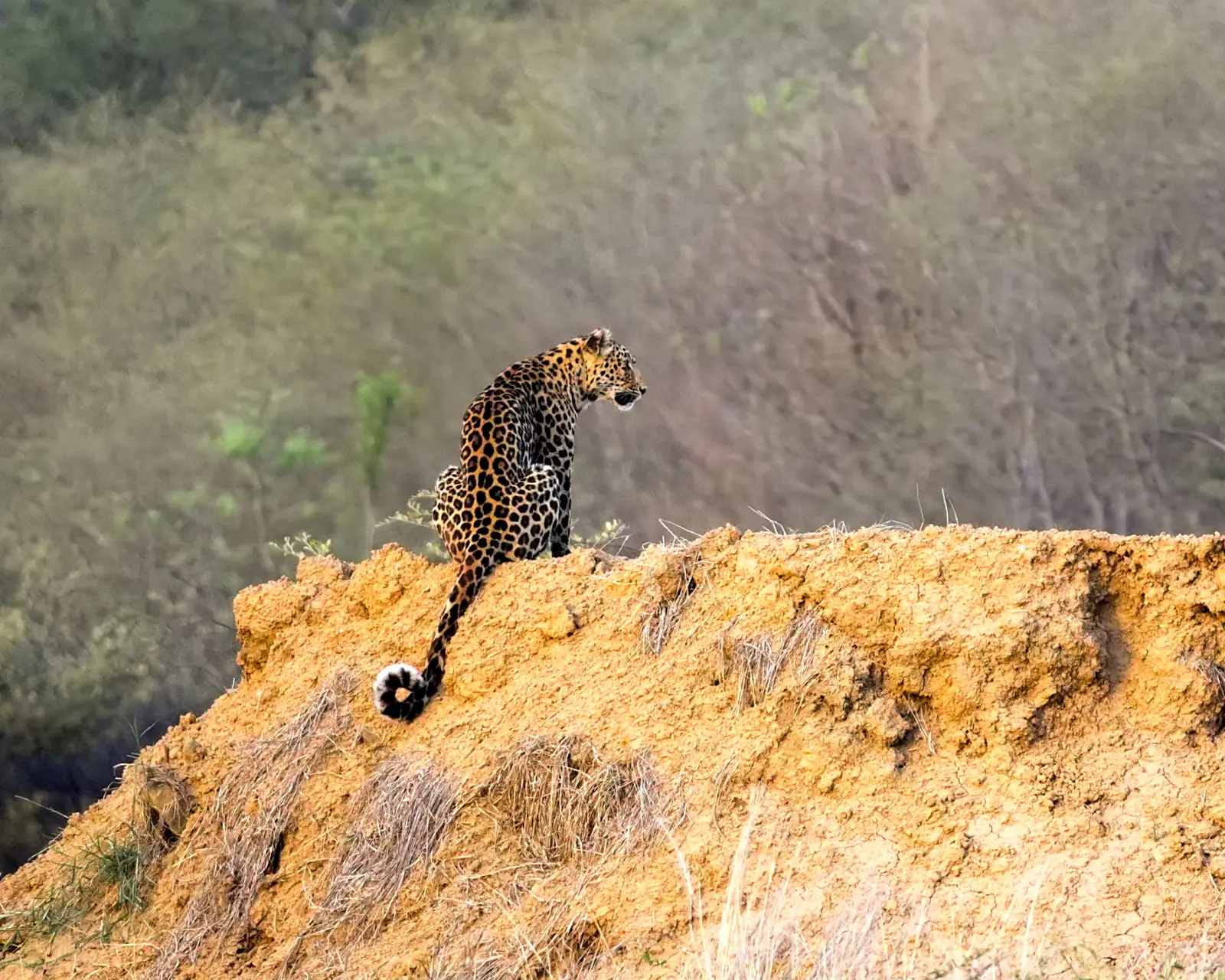
The Challenges — Honestly
Moving a species across continents and attempting to establish a new population in a landscape where it disappeared more than seventy years ago was never going to be simple.
Project Cheetah has experienced mortality and other setbacks alongside its successes.
The project's monitoring has documented deaths associated with causes including injuries and other health-related problems.
This is part of the reality of working with free-ranging wild animals.
The response has been an active veterinary and monitoring programme, including health checks, treatment, disease surveillance, ectoparasite management and continuous tracking.
GPS collars allow field teams to monitor movement and identify unusual behaviour or inactivity.
The project is therefore not a simple release-and-hope programme.
It is an adaptive conservation effort where decisions continue to change as scientists and field teams learn more.
A cheetah sighting at Kuno is never guaranteed. These are free-ranging wild animals, not animals kept in an enclosure for visitors.
Growing the Metapopulation
Kuno was always intended to be the beginning, not the entire story.
The long-term approach is to establish a metapopulation across multiple suitable landscapes.
The idea is simple: if the entire population depends on one landscape, a major problem such as disease, drought, habitat pressure or overcrowding could affect the whole project.
Multiple populations provide greater resilience and allow the project to manage cheetahs at a landscape level.
Gandhi Sagar Wildlife Sanctuary
Gandhi Sagar in Madhya Pradesh has become the second active cheetah site. Cheetahs were moved there from Kuno in 2025 as the first major step toward expanding the programme beyond Kuno.
Banni Grasslands
Banni Grasslands in Gujarat is being prepared as another potential cheetah landscape.
Nauradehi Wildlife Sanctuary
Nauradehi in Madhya Pradesh is also part of the project's future landscape planning. It is now part of Veerangana Durgavati Tiger Reserve.
The aim is not to replace Kuno. It is to build a larger network of suitable landscapes where cheetahs can establish viable populations over the long term.
People and Livelihoods
Project Cheetah is also a story about people.
The conservation programme has created new opportunities for communities living around the cheetah landscape.
Local residents have been trained as Cheetah Mitras, supporting awareness, monitoring and communication between communities and the project.
Local people have also been trained in cheetah tracking and nature guiding.
Schools around the landscape have been involved through awareness and outreach programmes.
This matters because long-term wildlife conservation cannot happen without the support of the people who live alongside the protected landscape.
Tourism also has a role to play.
When visitors stay locally, use local guides, book safaris and spend money in the surrounding area, wildlife tourism can create an economic reason for communities to value the landscape.
International Collaboration
Project Cheetah is an international conservation programme.
India's work with Namibia, South Africa and Botswana goes beyond simply receiving animals.
It involves scientific cooperation, animal selection, veterinary planning, transport, monitoring, population management and long-term conservation planning.
The arrival of the Botswana cheetahs in 2026 is one example of this continuing international cooperation.
The success of the project therefore depends on relationships between governments, conservation scientists, wildlife managers, veterinarians and field teams across countries.
Seeing Project Cheetah on Safari
Coming to Kuno does not guarantee a cheetah sighting.
The animals are wild, wide-ranging and genuinely free.
That is the entire point of the project — but it also means that sightings depend on timing, animal movements, weather, habitat and a certain amount of luck.
What a Kuno safari does offer is the opportunity to enter the landscape where this conservation story is actively happening.
You may see a cheetah.
You may find a leopard.
You may come across a wolf, hyena, deer or raptor.
Or you may spend hours driving through an empty grassland.
All of those experiences are part of a real wild landscape. And when a cheetah finally appears in the open Kuno landscape, you understand why the wait was worth it.
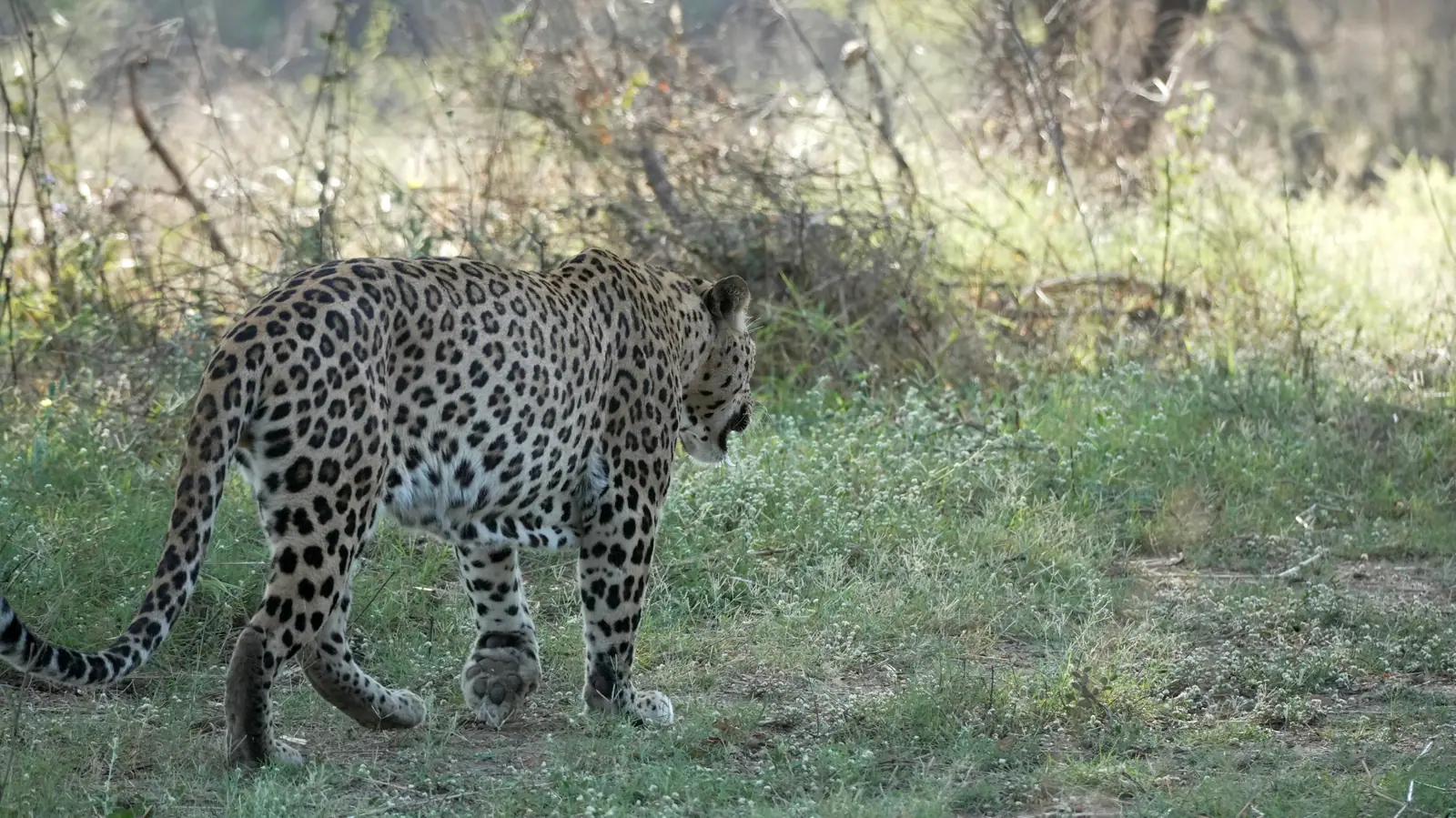
Why Project Cheetah Matters
Project Cheetah is not simply about bringing one animal back to India.
It is an experiment in restoring a missing predator, rebuilding ecological processes, developing new conservation landscapes and creating a long-term population across multiple sites.
Its success will ultimately be measured over decades, not a few safari seasons.
Kuno is where that story is happening today.
And it is still being written.
Explore the Cheetah Story
Meet the Cheetahs
Explore the individual cheetahs that have shaped India's reintroduction story.
Explore
Cheetah Timeline
Follow the major events in Project Cheetah from 2022 onwards.
Explore
Cheetah Releases
Learn about the animals brought from Namibia, South Africa and Botswana.
Explore
Cheetah Births in India
Follow the growing generation of cheetahs born in the Indian landscape.
Explore
Project Cheetah FAQ
Answers to the most common questions about India's cheetah reintroduction.
Explore
Plan Your Kuno Visit
Explore Kuno National Park
Understand the landscape, history and wildlife of Kuno.
Explore
Compare the Safari Gates
See how Tiktoli, Ahera and Peepalbawdi differ.
Explore
Explore Kuno Wildlife
Learn about the predators, herbivores and birds you may encounter.
Explore
Plan My Kuno Safari
Let us help you plan your safari, stay and transport.
Explore
Project Cheetah — A Story Still in Progress
The first cheetahs arrived in 2022.
Today, cheetahs are hunting, breeding and raising their young in India.
The population is growing, new landscapes are being prepared and the science continues to evolve.
Kuno is not the end of India's cheetah story.
It is where the next chapter is being written.
Sources
Press Information Bureau, Government of India; Ministry of Environment, Forest and Climate Change; National Tiger Conservation Authority; Wildlife Institute of India; Bringing Back The Cheetah to India — Annual Progress Report 2024–25.
Population figures are presented as dated snapshots because the population changes as cheetahs are born, die and move between sites.
Speed and hunting data: Wilson et al., "Locomotion dynamics of hunting in wild cheetahs", Nature 498 (2013). 100 m time: Cincinnati Zoo / National Geographic, 2012. Population: Project Cheetah four-year status review, 17 Sep 2026, as reported by DD India and The Week. Botswana cheetahs: Press Information Bureau, Feb 2026. Second-generation cubs: Akashvani News, Dec 2025. Gaurav: The Hawk, 24 Sep 2026. Animal speeds other than cheetah and Usain Bolt are approximate.
Frequently Asked Questions
Your guide to Kuno National Park, cheetahs, wildlife and safari experiences.
Copyright © Flying Cat Safari 2026 | Powered by Kuno Cheetah Jungle Safari